



Type:
EZ Push Lightweight 4-Wheel Dog Stroller

Type:
EZ Push Lightweight 3-Wheel Dog Stroller


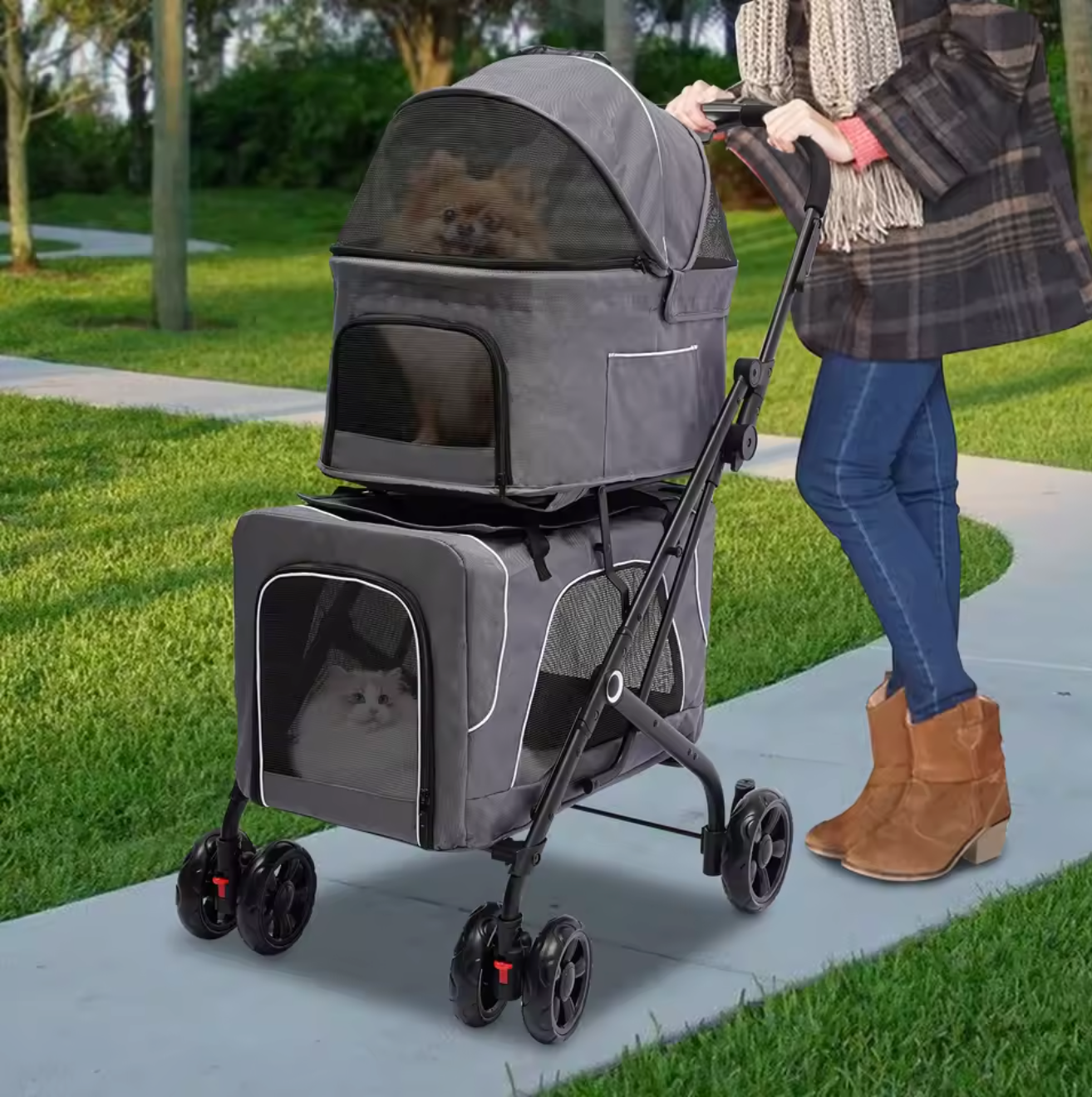
About Our Dog Strollers
FAQs
What size dog can fit in a dog stroller?
What size dog can fit in a dog stroller?
When should I use a dog stroller?
When should I use a dog stroller?
Are dog strollers safe for everyday use?
Are dog strollers safe for everyday use?
Check Our Our Latest Blog Posts
What Is a Slow Feeder Dog Bowl and Does Your Dog Need One?
Slow feeder dog bowls are worth it for dogs that eat too quickly because they reduce choking risk, improve digestion, and can prevent bloating. Dogs that inhale food tend to swallow air along with it, which can lead to discomfort and long-term digestive issues. A slow feeder bowl forces dogs to eat around obstacles, naturally slowing their pace. For most dog owners, this is a low-cost upgrade that can make a noticeable difference in behavior, digestion, and overall feeding habits within a few days. What is a slow feeder dog bowl? A slow feeder dog bowl is a feeding bowl designed with ridges, mazes, or obstacles that force dogs to eat more slowly. Instead of a flat surface, these bowls have raised patterns that make dogs work around barriers to reach their food. This turns mealtime into a short mental challenge instead of a race. Most slow feeder bowls are made from plastic, silicone, or stainless steel, and come in different difficulty levels based on how complex the design is. How do slow feeder dog bowls work? Slow feeder dog bowls work by physically preventing dogs from taking large bites, forcing smaller, slower mouthfuls. The internal patterns break up the food into smaller sections, so dogs cannot scoop everything at once. This naturally increases the time it takes to finish a meal. Many dogs go from finishing a meal in under 30 seconds to taking several minutes, which is enough to improve digestion and reduce gulping. What are the benefits of slow feeder dog bowls? Slow feeder dog bowls help prevent bloating, improve digestion, reduce choking risk, and provide mental stimulation during meals. Eating too quickly is linked to issues like vomiting, gas, and discomfort. Slowing down food intake gives the digestive system more time to process meals properly. They also double as enrichment tools, especially for high-energy dogs that benefit from small daily challenges. For many owners, this also reduces begging behavior and post-meal restlessness. Are slow feeder dog bowls safe for all dogs? Slow feeder dog bowls are safe for most dogs, but not ideal for every situation. Dogs with flat faces like pugs or bulldogs can struggle with deeper maze designs. Senior dogs or dogs with dental issues may also find them frustrating or difficult to use. If a dog shows signs of stress, stops eating, or paws aggressively at the bowl, switching to a simpler design or a different feeding method is a better option. When should you NOT use a slow feeder dog bowl? You should not use a slow feeder dog bowl if a dog becomes frustrated, refuses to eat, or has physical limitations that make the design difficult. Some dogs become anxious when they cannot access food easily, which defeats the purpose of improving feeding habits. In these cases, stress outweighs the benefits. Dogs recovering from illness, underweight dogs that need to eat quickly, or dogs with short snouts may be better suited for shallow or alternative feeding tools. Slow feeder dog bowls vs puzzle feeders: what’s the difference? Slow feeder dog bowls are designed to slow eating, while puzzle feeders are designed to challenge a dog mentally for longer periods. Slow feeders are typically used for everyday meals and only extend eating time by a few minutes. Puzzle feeders, on the other hand, can keep dogs occupied much longer and often require problem-solving skills. If the goal is better digestion and safer eating, a slow feeder bowl is the better choice. If the goal is mental stimulation and boredom reduction, puzzle feeders are more effective. Are slow feeder dog bowls worth it? Slow feeder dog bowls are worth it for most fast-eating dogs because they are affordable, effective, and require no training. Most slow feeder bowls cost between $10 and $25, making them one of the lowest-cost upgrades with a clear benefit. Results are usually immediate, with noticeable slower eating from the first meal. For dogs that eat at a normal pace, the value is lower, but for fast eaters, the improvement in digestion and behavior makes it an easy decision. How do you choose the best slow feeder dog bowl? The best slow feeder dog bowl depends on a dog’s size, eating speed, and comfort with obstacles. Start by matching the bowl size to your dog’s portion size to avoid overcrowding food. Then choose a difficulty level based on how fast your dog eats. Keep these factors in mind: Material: Stainless steel is durable and hygienic, while plastic is lighter and more affordable Design depth: Shallow patterns are better for beginners or flat-faced dogs Stability: Non-slip bases prevent sliding during meals Ease of cleaning: Dishwasher-safe bowls save time Choosing the right design often requires a bit of trial and error, but starting simple usually leads to better results. How to introduce a slow feeder dog bowl (step-by-step) You should introduce a slow feeder dog bowl gradually to avoid frustration and ensure your dog adapts comfortably. Start by mixing the slow feeder bowl with your dog’s regular bowl for the first few meals Use a simple design before moving to more complex patterns Monitor your dog’s behavior during feeding for signs of frustration Keep portions slightly smaller at first to make access easier Gradually transition to using only the slow feeder bowl Most dogs adjust within 2 to 3 days, especially if the design matches their comfort level. Do slow feeder dog bowls actually help with bloating? Slow feeder dog bowls can help reduce bloating by slowing food intake and limiting how much air dogs swallow. Fast eating is one of the contributing factors to bloat, especially in larger breeds. While a slow feeder is not a guaranteed prevention method, it reduces one of the main risks. For dogs prone to bloating, combining a slow feeder with smaller, more frequent meals can further reduce risk. What type of slow feeder dog bowl is best? The best type of slow feeder dog bowl is one that matches your dog’s eating speed without causing frustration. For beginners, a shallow spiral or wave pattern works well. For aggressive eaters, more complex maze designs provide better results. Material choice also matters. Stainless steel tends to last longer and resist bacteria buildup, while silicone options are softer and quieter for indoor use. FAQ: Slow Feeder Dog Bowls Do slow feeder dog bowls really work? Slow feeder dog bowls work for most dogs by physically slowing down how quickly they can eat. Most owners see immediate results, with dogs taking longer to finish meals from the first use. How much slower will my dog eat? Most dogs eat 2 to 5 times slower with a slow feeder bowl. The exact difference depends on the design and the dog’s behavior. Can slow feeder bowls cause frustration? Slow feeder bowls can cause frustration if the design is too complex. Starting with a simple pattern helps prevent this issue. Are slow feeder bowls hard to clean? Most slow feeder bowls are easy to clean, especially dishwasher-safe models. More complex designs may require a quick brush to remove trapped food. Can I use wet food in a slow feeder bowl? Slow feeder bowls can be used with wet food, but cleaning may take slightly longer. Sticky foods can get trapped in tighter patterns. A simple upgrade that improves how your dog eats Slow feeder dog bowls are one of the easiest ways to improve your dog’s eating habits without changing their diet. For fast eaters, the difference is immediate and noticeable. For owners, it is a simple, low-cost solution that solves a common problem. If your dog finishes meals too quickly, switching to a slow feeder bowl is a practical next step that delivers real results without overcomplicating feeding. So, if you're considering making the switch, shop Urban Tail Co. for your next dog bowl!
Learn moreDog Steps for Beds: Do You Actually Need Them?
You've noticed it. Your dog walks up to the bed, does that little pre-jump crouch, and then just... stops. Maybe they circle a few times and try again. Maybe they sit at the foot of the bed and stare at you, waiting for a lift they didn't used to need. Or maybe nothing's changed yet - you just have a tall platform bed and you're wondering if the daily jumping is something you should be thinking about. Either way, you've probably come across dog steps and wondered if they're actually worth it, or just an unnecessary pet product. The honest answer is: it depends on your dog. Here's how to figure it out. Signs Your Dog Actually Needs Steps for the Bed Before buying anything, run through this list. If none of these apply, your dog might not need steps yet. Your dog probably needs steps if: They hesitate before jumping, circle repeatedly, or need multiple attempts to make it up They used to jump up easily and have stopped, or are noticeably slower about it They're a small breed - Dachshunds, Chihuahuas, Shih Tzus, Maltese, and similar dogs absorb disproportionate joint impact every time they leap from a significant height They're 7 years or older, when joint stiffness typically begins even in otherwise healthy dogs They've been diagnosed with arthritis, hip dysplasia, or any joint condition They're recovering from surgery, an ACL tear, or a leg injury - in which case jumping is often explicitly prohibited by vets during recovery (more on this below) Your bed is unusually high; platform beds, tall frames, or thick mattress toppers can push the surface height above 24 inches, which is a significant leap for a small or aging dog Your dog probably doesn't need steps yet if: They're young and healthy and jump up without hesitation or difficulty Your bed height is under 18 inches from floor to mattress surface There are no signs of joint stiffness, slowing down, or reluctance to jump If your dog falls into the second category, steps aren't urgent, but they're worth keeping in mind as your dog ages. It's easier to introduce steps to a healthy dog than to a dog who's already in pain and reluctant to try something new. If your dog is recovering from an ACL injury or surgery, steps aren't optional, they're part of the recovery setup. Jumping on and off furniture is one of the most common ways dogs re-injure a healing ACL. You can read our full guide to ACL surgery recovery and what to expect here. Why High Beds Are Harder on Dogs Than Most People Realize The jump up gets most of the attention. But the jump down is actually where most joint damage happens — and it's the one owners think about least. When a dog jumps down from a high bed, they're absorbing the full impact of their body weight through their front legs and wrists on landing. For a 20-pound dog jumping from a 26-inch bed, that impact force is significant, and it compounds over time. Once a day, every day, for years. Small breeds and seniors feel this disproportionately. Their joints have less cushioning, and they're often jumping from heights that are more extreme relative to their body size. A jump that looks easy might not feel that way. What dog steps actually do is eliminate the jump entirely in both directions. Your dog walks up, walks down. No impact. No hesitation. This is the core reason vets recommend them for post-surgery recovery and arthritic dogs, and why many owners who introduce them for an aging dog wish they'd done it sooner. How to Measure Your Bed and Choose the Right Step Size This is the part most people skip, and it's the most important. Dog steps are sized by height, and the goal is to get steps that reach close to your mattress surface. Too short, and your dog still has to make a small jump at the top. Too tall, and the steps are awkward and uncomfortable. How to measure: Grab a tape measure Measure from the floor to the top of your mattress (not the frame, the actual sleeping surface) If you have a thick mattress topper, include that in the measurement Step size guide: Bed height (floor to mattress) Recommended size Up to 18" 3-step (15.7" tall) 18" – 22" 4-step (17.4" tall) 22" and above 5-step (23.5" tall) A few things worth knowing: The step height should be close to your mattress height but doesn't need to be exact - a 1–2 inch gap at the top is fine and normal If you're right on the border between two sizes, go up rather than down Platform beds often look lower than they are because the frame is close to the ground, so measure carefully before assuming What to Look for in Dog Steps for a High Bed Not all dog steps are built the same. Here's what actually matters, in order of importance. Material: foam vs. hard plastic vs. wood Foam is the clear winner for dogs with joint concerns. High-density foam absorbs impact and is gentle on paws with every step, unlike hard plastic or wood which have no give. For a young, healthy dog this matters less. For a senior dog or one with arthritis, it matters a lot. Hard plastic steps are cheaper and often more compact, but they're unforgiving and can be slippery. Wood looks nice but similarly offers no cushioning and tends to be heavier. If joint health is why you're looking at steps in the first place, foam is the only material that makes sense. Step width The step surface needs to be wide enough for your dog's paws to land fully flat — not teetering on the edge. Check the listed width measurement, not just the overall footprint of the steps. A step that's too narrow creates instability and causes dogs to stop using them. Non-slip base This is non-negotiable if you have hardwood or tile floors. Steps that slide when your dog uses them will be abandoned within a few days. Look for a non-slip rubber or grip base on the bottom. Weight rating "Small dog steps" is a marketing term, not a specification. Always check the actual listed weight limit and make sure it's above your dog's weight - not close to it, above it. A dog near the weight limit creates unnecessary flexing and instability in the steps. Washable cover Dog steps next to a bed get used multiple times a day. A removable, machine-washable cover isn't a luxury, it's a practical requirement. Without it, you're looking at steps that get grimy fast with no easy way to clean them. Curved vs. straight design Standard straight steps have a uniform rise angle on every step. Curved steps reduce that angle, which means each step requires less leg extension. The difference is subtle for a healthy dog but meaningful for one with hip stiffness or limited mobility. If your dog has any joint issues, curved foam steps are worth the slight premium. Our Recommendation — and Why We make foam dog steps, so we're not a neutral party here. But here's what informed the design of our steps, and how to decide if they're right for your dog. Our curved foam steps are built specifically for dogs with joint concerns and high furniture. The high-density foam absorbs impact on every step, the curved design reduces the angle of each rise, the non-slip base keeps them stable on smooth floors, and the plush cover is removable for machine washing. They come in three sizes to match your bed height: 3-Step Curved Foam Dog Steps Best for beds up to 18" high. The most compact option, ideal for small breeds and dogs who need just a little help getting up. Dimensions: 22.4" L x 15.7" W x 15.7" H. Supports dogs up to 50 lbs. 4-Step Curved Foam Dog Steps Best for beds 18"–22" high — the most common size for standard and platform beds. Dimensions: 26" L x 15.7" W x 17.4" H. Supports dogs up to 50 lbs. 5-Step Curved Foam Dog Steps Best for beds 22" and above — tall platform beds, high frames, or thick mattresses. Also a good choice for larger dogs who benefit from a more gradual incline. Dimensions: 32" L x 15.7" W x 23.5" H. Supports dogs up to 50 lbs. Getting Your Dog to Actually Use the Steps This is the part most product pages skip, and it's where a lot of owners get frustrated. Most dogs don't just start using steps immediately. They need time to figure out what they are, decide they're safe, and build the habit. Here's how to make that easier: Don't force it. Place the steps next to the bed and let your dog sniff and investigate on their own terms. Rushing this step almost always backfires. Use treats. Place a small treat on each step. Let your dog approach, take the treat, and walk away. Repeat a few times before encouraging them to go all the way up. The goal is to make the steps feel like a good thing, not a hurdle. Guide them slowly the first few times. Once they're comfortable approaching, gently encourage them step by step — don't push or lift. Let them commit to each step before moving to the next. Make sure there's no gap. Place the steps flush against the bed frame with no gap between the top step and the mattress. A gap creates a second small jump that undermines the whole point. Be consistent. If you let your dog jump sometimes, either by lifting them or letting them leap up without the steps, they'll keep trying to do it that way. The steps only become a habit if they're the consistent path to the bed. Most dogs adapt within 3–7 days. Senior dogs and anxious dogs can take up to two weeks. Patience matters more than technique here. So, Are Dog Steps Worth It? If your dog is hesitating, aging, a small breed doing big jumps, or recovering from any kind of injury: yes, without much debate. If your dog is young, healthy, jumping easily, and your bed isn't particularly high: probably not yet, but it's worth revisiting as they get older. The thing most owners say in hindsight is that they wish they'd introduced steps earlier, when their dog was still healthy enough to learn them quickly. A dog in pain or with significant joint stiffness takes longer to adapt and may resist them initially. If you've decided steps make sense for your dog, our curved foam steps were designed specifically for dogs that need joint-friendly mobility support. You can find all three sizes, along with our full size guide here.
Learn moreWhy Is My Dog Panting So Much? Common Causes, Red Flags, and What to Do
Panting is one of those things that is completely normal until it suddenly is not. Maybe your dog just came in from the backyard and is breathing hard for way longer than usual. Maybe they are panting while lying on the couch in a cool room. Or maybe you are noticing it at night when everything is quiet, and it feels more intense than normal. So, why is my dog panting so much? Sometimes the answer is simple: heat, excitement, stress, or recent activity. Other times, heavy dog panting can be an early clue that something is off, like pain, overheating, a medication side effect, or a health issue involving the heart, lungs, or hormones. This guide breaks down what normal panting looks like, the most common reasons dogs pant a lot, signs that mean it is time to call the vet, and what you can do at home right now. Why dogs pant in the first place Dogs pant to regulate body temperature. Humans cool off mostly through sweating, but dogs rely heavily on panting to move heat out of the body. When a dog pants, moisture evaporates from the tongue and upper airway, helping reduce internal temperature. Panting can also show up during emotional spikes. Dogs may pant when excited, anxious, or overstimulated because the nervous system ramps up. It is similar to how some people breathe faster when stressed. That means dog panting is not automatically a problem. The key is context and pattern: when it happens, how intense it is, how long it lasts, and what else is going on. What normal panting looks like Normal panting usually has a clear reason and a clear endpoint. It happens after exercise, play, or a walk. It happens when the room is warm or the sun is strong. It can show up when a dog is thrilled to see you or nervous about a new situation. Most importantly, it eases down after your dog rests, cools off, or settles. Normal panting also tends to look easy. Your dog’s body is relaxed, their breathing does not look strained, and they can lie down comfortably and recover. How much panting is too much? Excessive panting is less about an exact number and more about a mismatch between the panting and the situation. Pay attention if your dog is panting hard: while resting or sleeping in a cool environment after very light activity for a long time with no sign of slowing down along with other symptoms like coughing, weakness, vomiting, pacing, trembling, or discomfort If you are thinking, “This is not my dog’s normal,” that matters. You know your dog’s baseline better than anyone. Common reasons your dog is panting so much Heat and mild overheating This is the most common reason. Dogs can overheat faster than many people realize, especially in humidity. Even moderate temperatures can feel intense if your dog has thick fur, is overweight, is older, or has a shorter muzzle. Heat-related panting often comes with seeking cool surfaces, stretching out on tile, drinking more, or choosing shade. If you bring your dog indoors, offer water, and let them rest, the panting should steadily improve. Exercise or overexertion Heavy panting after a run, rough play, or an active walk is normal. The bigger question is recovery time. If your dog is still panting hard long after they have been resting, or if they seem unusually tired, that can be a sign they pushed too hard or are having trouble regulating temperature or oxygen. Dogs that are out of shape can pant more with lighter activity, but that should improve gradually as conditioning improves. If it seems to be getting worse over time, not better, that points away from simple conditioning. Stress and anxiety Anxiety-related dog panting can look intense and persistent, even in a cool room. You might also see pacing, yawning, lip licking, wide eyes, trembling, hiding, or clingy behavior. Common triggers include storms, fireworks, travel, unfamiliar visitors, a new home routine, or separation. Some dogs also pant in anticipation, like when they know they are about to go to the vet or get in the car. If the pattern fits a predictable trigger, anxiety becomes a strong possibility. Excitement Some dogs pant simply because they are amped up. Visitors at the door, a leash in your hand, or meal prep can push excitement high enough to cause panting. This is usually short-lived and paired with happy body language. Pain or discomfort Pain is a big one people miss. Dogs often hide pain well, and panting can be a subtle sign that something hurts. Joint pain, back pain, dental pain, and abdominal discomfort can all cause heavy panting, especially at night when your dog is no longer distracted. If your dog is panting and also seems restless, cannot settle, is reluctant to jump or use stairs, is moving stiffly, or is guarding a body part, pain should be on your radar. Medical reasons dogs pant excessively If you are asking “why is my dog panting so much” and you cannot tie it to heat, exercise, excitement, or a clear stressor, it is smart to consider medical causes. Below are some of the more common ones. Heatstroke Heatstroke is an emergency. It is not just “hot dog panting.” It is overheating that can quickly damage organs and become life-threatening. Warning signs can include very rapid panting, thick drool, bright red gums, weakness, vomiting or diarrhea, wobbliness, confusion, or collapse. Some dogs also feel extremely hot to the touch. If you suspect heatstroke, contact an emergency vet immediately. While you are getting help, move your dog into a cool area and use cool water on the body (not ice water), especially on the belly, paws, and groin area. The goal is controlled cooling while getting to medical care fast. Respiratory issues Breathing problems can cause panting that looks like your dog cannot quite catch their breath. This can include conditions like collapsed trachea (common in small breeds), infections like pneumonia, chronic airway inflammation, or laryngeal paralysis in older large breeds. Flat-faced dogs like Pugs, Bulldogs, and Boston Terriers can pant more due to airway anatomy. They also have a higher risk of overheating and respiratory distress, so persistent or intense panting in these breeds deserves extra caution. If you see noisy breathing, wheezing, gagging, repeated coughs, or a big effort in the chest and belly with each breath, call your vet. Heart disease Heart issues can lead to panting because the body is not moving oxygen as efficiently. Some dogs with heart problems also cough, tire easily, or struggle more at night. Fluid buildup in or around the lungs can make breathing harder, and panting becomes more noticeable. If dog panting shows up with coughing, fainting, weakness, or reduced tolerance for walks, that is a strong reason to get checked. Cushing’s disease Cushing’s disease is a hormonal disorder that can cause increased panting. It often shows up alongside increased thirst, increased urination, increased appetite, a pot-bellied appearance, and coat or skin changes. Panting from Cushing’s tends to be persistent and not tied to activity or temperature. Obesity Extra weight increases strain on the body and makes temperature regulation harder. Overweight dogs often pant more during mild activity and can overheat faster. If your dog has gained weight and panting has become more common, weight can be a contributing factor even if it is not the only cause. Medication side effects Some medications can cause panting, especially steroids like prednisone. If your dog recently started a new medication and the timing lines up, call your vet and ask if panting is a known side effect and what level is expected. Never stop a prescription medication without veterinary guidance, but do report symptoms quickly. Fever, infection, or inflammation Dogs pant more when their body temperature is elevated, including from fever. Infections, inflammatory conditions, and some immune issues can raise temperature or cause discomfort that leads to panting. If your dog is panting and also seems lethargic, refuses food, shivers, has nasal discharge, or seems “not themselves,” it is time for a vet visit. Toxins and poisoning Some toxins can cause panting along with drooling, vomiting, tremors, agitation, or weakness. If you suspect your dog got into chocolate, xylitol, human medications, certain plants, pesticides, or unknown substances, treat it as urgent. Contact your vet or an emergency clinic right away. Why is my dog panting at night? Nighttime panting is a common reason people search “why is my dog panting so much” because it feels more alarming when everything is still. A few common explanations include: Pain is a big one. Arthritis, back pain, and other chronic issues often feel worse when your dog is lying down and trying to get comfortable. Some dogs will pace, change sleeping spots, or repeatedly stand up and lie down. Anxiety can also show up at night. Some dogs become more sensitive to sounds, especially as they age, and nighttime can bring new triggers. Heart or lung problems can make breathing harder when resting, so panting becomes more noticeable at night. Older dogs can develop cognitive changes that lead to nighttime restlessness and panting. If nighttime panting is new, frequent, or intense, it is worth a vet conversation even if your dog seems fine during the day. Why is my senior dog panting more? Aging changes the picture. Senior dogs are more likely to deal with arthritis, reduced conditioning, and underlying medical issues like heart disease or endocrine problems. They can also be more sensitive to heat and more easily stressed. It is easy to chalk it up to “old age,” but a noticeable increase in dog panting in a senior dog deserves attention because treatable issues are common, and comfort can often improve with the right plan. Why is my dog panting while resting? Resting panting is one of the clearer signs that something needs a closer look. A helpful thing you can do at home is check your dog’s resting breathing rate when they are asleep or fully relaxed. Count how many breaths they take in 30 seconds and double it. A typical resting rate for many dogs is roughly 10 to 30 breaths per minute, but individual baselines vary. The bigger clue is a consistent upward change for your dog, especially if you see effort in the breathing, not just faster breathing. If your dog is panting while resting and you also notice cough, weakness, reduced appetite, or trouble settling, call your vet. Signs your dog’s panting is an emergency Get urgent veterinary care if panting comes with any of the following: pale, blue, gray, or very bright red gums collapse, severe weakness, or inability to stand repeated vomiting or diarrhea distended or painful-looking abdomen obvious breathing struggle, like flared nostrils and strong abdominal effort excessive drooling with distress disorientation, stumbling, or seizures suspected heatstroke or toxin exposure If your gut is telling you this is not normal, trust that instinct. What to do right now if your dog is panting excessively Start with calm, simple steps. Move your dog to a cooler, quieter space. Turn on a fan or AC if available. Offer fresh water, but do not force it. Encourage rest and keep activity minimal. If you think heat is involved, use cool water on the paws, belly, and inner thighs and keep airflow moving over the damp fur to support cooling. Skip ice baths because extreme cold can cause blood vessels to constrict and interfere with cooling. If panting does not steadily improve within a reasonable window after cooling and rest, or if you see any red flags, contact your vet. It can help to record a short video of the panting episode, especially if it seems intermittent. That visual is often useful for a vet to assess breathing effort and severity. What your vet may check If you bring your dog in for heavy panting, your vet may start with: A physical exam and temperature check to assess overheating, fever, pain, and respiratory effort. They will listen to the heart and lungs and look at gum color and hydration. They may recommend bloodwork to check for infection, inflammation, endocrine issues, and organ function. Imaging like chest X-rays can help evaluate the heart and lungs. In some cases, an abdominal ultrasound is helpful if abdominal pain or internal disease is suspected. They will also review medications, since some drugs can increase panting. Preventing excessive panting You cannot prevent every cause, but you can reduce risk and catch problems earlier. Keep your dog cool and hydrated in warm weather, and be extra cautious with high humidity. Avoid midday heat, provide shade, and never leave a dog in a parked car. Keep activity appropriate for your dog’s age, breed, and conditioning. Shorter, more frequent walks can be easier than long bursts, especially for older dogs. If anxiety drives panting, build a plan around triggers. That can include creating a quiet safe space, desensitization work, and talking with your vet about behavioral support if needed. Routine vet care matters too. Many medical issues that cause dog panting are easier to manage when caught early. Quick answers to common questions Why is my dog panting but it is not hot? Stress, excitement, pain, medication side effects, and medical issues like heart or respiratory conditions can all cause panting in cool environments. Is it normal for dogs to pant while sleeping? Light panting can happen during dreams, but heavy or frequent panting during rest is less typical and deserves attention, especially if it is new. How can I tell if panting is from pain? Look for restlessness, difficulty settling, changes in movement, reluctance to jump, stiffness, sensitivity when touched, or panting that is worse at night. A vet exam is the best way to confirm. How long is too long for a dog to pant?After exercise or excitement, panting should gradually ease as your dog rests. If it stays intense, starts at rest, or lasts far longer than your dog’s normal recovery time, call your vet. Final thoughts If you are searching “why is my dog panting so much,” you are already doing the right thing by paying attention. Panting is often harmless and tied to heat, activity, or emotions. But persistent dog panting, especially at rest or at night, can also be one of the first signs of pain or an underlying health issue. Focus on context, pattern, and any additional symptoms. If something feels off, or if your dog is struggling to breathe, do not wait it out. A quick vet check can bring clarity, and in some situations it can be truly lifesaving.
Learn more